

I Applied to 50 Architecture Jobs and Here's What Actually Happened
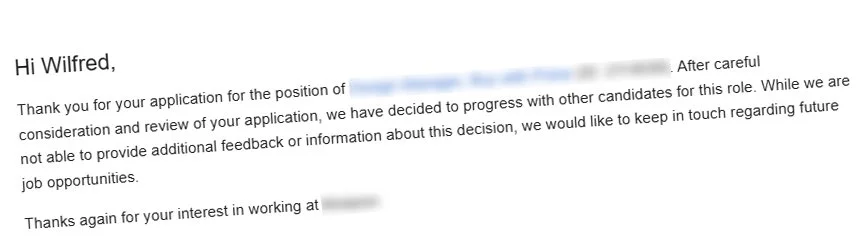
Let me tell you my story. I'd just finished graduate school with degrees from RISD and Harvard GSD. I had a portfolio I was proud of, recommendations from professors whose names people recognized, and the naive confidence that comes from surviving architecture school.
I thought landing a job would be straightforward. Not easy—I wasn't that naive—but straightforward. Good schools, strong work, clear path forward.
I was spectacularly wrong.
Over six months, I applied to 50 architecture positions. I tracked every single one. The results were humbling, educational, and ultimately shaped how I think about hiring to this day.
If you're about to enter this gauntlet, here's what nobody tells you—backed by actual data from my own experiment.
The Brutal Numbers
Let me break down exactly what happened with those 50 applications:
32 applications: Complete radio silence. Not even an automated "thanks for applying" email.
12 applications: Polite rejection emails, usually within a week.
4 applications: Initial phone screenings that went nowhere.
2 applications: Full interview processes that ended in "we went with someone else."
0 applications: Job offers.
Zero. From fifty applications.
But here's the twist: I did get hired. Three times, actually, during that period. And none of those jobs came from applications.
How I Actually Got Hired
Job #1: The Professor Connection
A professor I'd TA-ed for mentioned my name to a colleague who owned a mid-size firm. No application, no posted position. Just a coffee meeting that turned into "we could use someone like you—when can you start?"
Job #2: The Portfolio Cover
At a portfolio review event, I bumped into a school alumna. She was curious about the cover I used to carry my portfolio—a custom leather case I'd made. Ironically, not even the portfolio itself. We talked for ten minutes about craft and making things by hand. She called two weeks later to ask if I was interested in a junior position on her team.
Job #3: The Classmate Network
A classmate who'd graduated a year earlier was at a firm that suddenly landed a huge project. They needed help fast. She recommended me, and I was hired within a week. The portfolio review happened after I was already working there.
Three jobs. All through relationships. None through the application portal I'd been pouring hours into.
What the Data Revealed
After tracking 50 applications, patterns emerged that nobody had warned me about.
Timing is everything—and you can't control it.
Firms that rejected me in January were hiring again in March. Not because I'd improved dramatically, but because their project pipeline shifted, someone left, or budgets got approved. Rejection often has nothing to do with you and everything to do with timing you can't predict or control.
Small firms move fast. Big firms move slow.
Applications to 5-person offices got responses within days—either enthusiastic interest or quick rejection. Applications to 100-person firms disappeared into bureaucratic quicksand. If you need a job quickly, focus on smaller practices. If you're being selective about a large firm, understand that their processes move at institutional speed.
Geographic flexibility opens doors.
The moment I expanded my search beyond my preferred city, opportunities multiplied. Firms in "secondary" markets were hungry for candidates with strong credentials. Sometimes the best career move isn't to the best city—at least not initially. You can always relocate later with experience on your resume.
The posted job often isn't real.
That listing you're crafting the perfect cover letter for? It might be a legal formality for an internal candidate they've already chosen. It might be posted to "see what's out there" before the budget is approved. It might be sitting in an inbox that won't get reviewed for months because the hiring manager is buried in deadlines. You have no way of knowing which scenario you're walking into.
The Psychological Toll
Nobody prepares you for the mental game of job hunting. Let me be honest about what it actually feels like.
The comparison trap.
Social media makes it look like everyone else is landing dream jobs effortlessly. Your LinkedIn feed becomes a highlight reel of other people's success while you're collecting rejection emails. Remember: people post about the one offer they accepted, not the twenty applications that went nowhere.
The ghosting phenomenon.
Getting ghosted after what felt like a great interview is uniquely demoralizing. You replay every conversation, wondering what you said wrong. Usually, you said nothing wrong. They had an internal candidate. The budget got pulled. The project fell through. Their silence isn't feedback about you—it's just how firms operate.
The confidence erosion.
By rejection thirty, you start questioning everything. Your portfolio, your career choice, your worth as a professional. The truth is that rejection in a numbers game doesn't reflect your value. It reflects market realities, timing, and fit—most of which are completely beyond your control.
What I'd Do Differently
Knowing what I know now, I wouldn't change everything. But I'd change how I allocated my time.
Start building relationships before you need them.
I made the classic mistake of networking when I was desperate. By then, it felt transactional. The connections that actually led to jobs were ones I'd built earlier—classmates, professors, people I'd met at lectures—without any agenda. If you're still in school, this is your advantage. Build relationships now, while you're peers, before anyone needs anything from anyone.
Run multiple strategies simultaneously.
I spent too much time perfecting applications and not enough time on other channels. The right approach is parallel: apply to posted positions, yes, but also attend events, reach out to alumni, reconnect with former colleagues, let professors know you're looking. Applications are one channel. They shouldn't be your only channel—or even your primary one.
Invest heavily in a few, lightly in many.
I wasted hours crafting perfect applications for dream firms that never responded, while also mass-applying carelessly to others. Neither worked. Better approach: identify five to ten firms you genuinely want to work for and invest in personalized outreach—research their recent projects, find a real connection, write something specific. Then cast a wider net with a streamlined application for the rest.
Prepare for a marathon.
Six months felt endless when I was living it. In retrospect, it's a normal timeline for architecture job searches, especially at the entry level. Having realistic expectations would have saved me enormous anxiety. Plan for three to six months minimum. Build your financial runway accordingly. And don't let month two feel like failure—you're just getting started.
The Real Lesson
Those 50 applications weren't wasted. They were market research.
Every rejection taught me something about the industry. Every ghosted interview helped me refine my approach. I learned which firms were real and which were just collecting resumes. I learned how to read between the lines of job postings. I learned that the architecture job market operates nothing like the meritocracy I'd imagined.
Now that I'm on the other side—reviewing applications, sitting on hiring committees, making decisions about who gets called back—a lot of what I realized from those 50 rejections rings true. I see the same patterns from the inside. The internal candidate who was always going to get the job. The budget that got pulled after we posted. The brilliant application that arrived two weeks after we'd already made an offer to someone else. Timing, relationships, and luck matter more than most applicants realize.
And when the right opportunities came through my network—which they did, three times—I was ready. I'd done enough applications to know what I was worth. I'd gotten enough rejections to be genuinely grateful for real interest. I'd learned enough about the market to evaluate offers intelligently.
The job hunt isn't just about finding work. It's about understanding how the industry actually operates. That knowledge will serve you for your entire career.
Your first job probably won't come from your best application. It'll probably come from a direction you didn't expect—a conversation, a referral, a connection you'd forgotten you had. A leather portfolio cover that sparked a conversation about craft.
Keep applying. But more importantly, keep showing up. Keep talking to people. Keep building relationships without agenda.
That's where the jobs actually are.
Navigating the post-grad job hunt and feeling stuck? Sometimes it helps to talk through your strategy with someone who's been through it—and who's been on the hiring side since. If this landed for you, the Early Career Guide goes further. It's free.
Or if you'd rather talk through your specific situation, book a free 30-minute consultation.
