

The Modular Ruin
What inherits the data center when the servers leave?
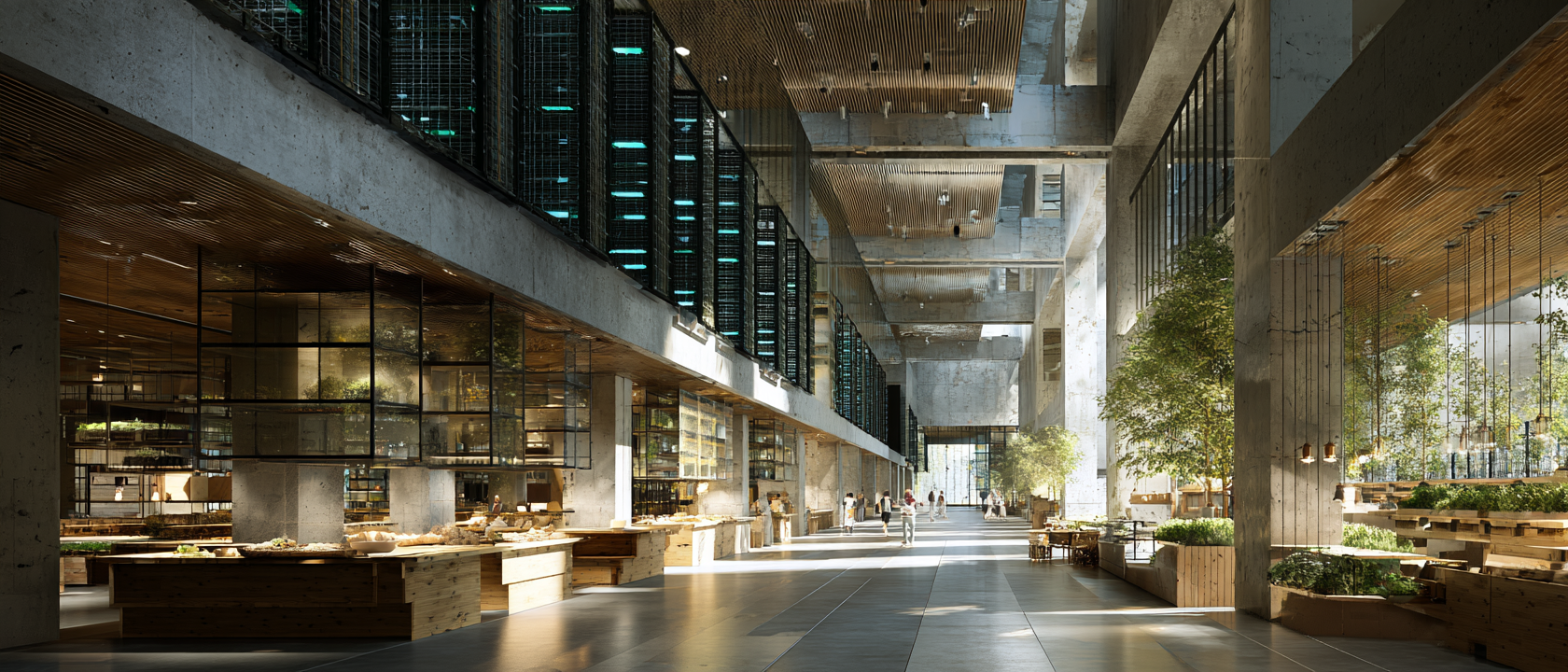
Data centers are built for 15-20 year lifespans. Technology evolves, efficiency standards tighten, and facilities become obsolete long before their structures fail. What remains is a shell: deep floor plates, heavy structural capacity, robust power infrastructure, and virtually no windows. These are not easy buildings to love. But they are buildings, and they will outlast their original purpose. What moves in when computation moves out?
Research Angles:
What programs actually thrive in deep, dark, column-free space? Warehousing, vertical farming, film production, archives?
Can data centers be designed for disassembly from the start—modular components that leave behind a flexible carcass?
How does the "ruin value" of digital infrastructure compare to industrial predecessors like factories and power plants?
Related Readings:
How Buildings Learn by Stewart Brand
Design for Disassembly by Philip Crowther
Tate Modern as adaptive reuse precedent
The Inheritance Problem
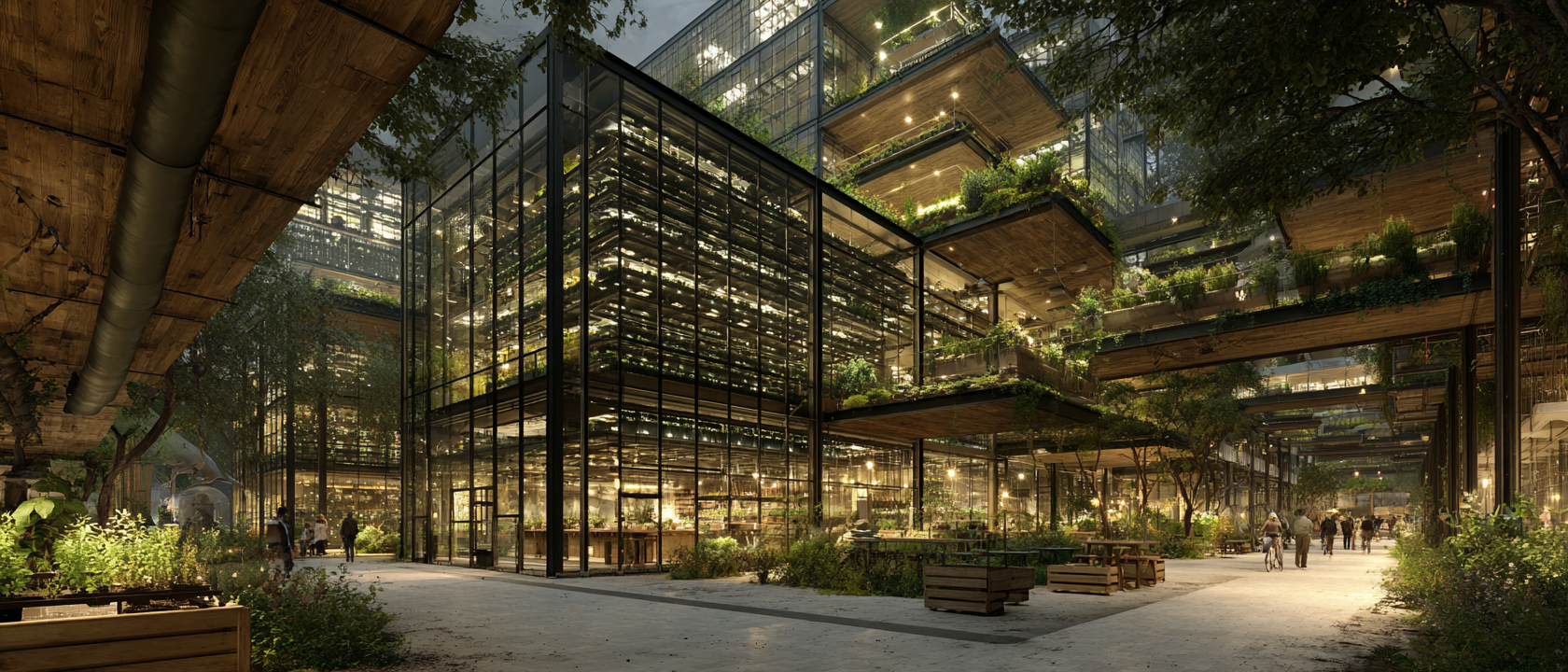
When a factory closes, the building left behind often finds new life. High ceilings, large windows, and durable materials make industrial shells attractive for housing, offices, and cultural venues. The adaptive reuse playbook is well established.
Data centers offer less. Their defining features—windowless walls, sealed environments, raised floors for cable management—serve computation specifically. The security perimeter that protected servers now just reads as hostile. The backup generators and cooling towers are liabilities, not assets.
Yet the basic structure is sound. Column spans of 30-50 feet. Floor loads designed for heavy equipment. Robust electrical infrastructure. The shell isn't worthless—it's just waiting for the right program.
Programs That Prefer the Dark
Not every use needs daylight. Some actively avoid it:
Vertical farming requires controlled environments—consistent temperature, artificial lighting tuned to plant growth, protection from pests. The sealed data center shell, stripped of servers, offers exactly this.
Mushroom cultivation thrives in darkness and stable humidity. The climate control infrastructure that cooled servers can regulate conditions for high-value fungal crops.
Film and television production needs large, dark volumes for set construction and controlled lighting. Sound stages are essentially windowless boxes with robust power—precisely what the decommissioned data center provides.
Archival storage—physical or digital—benefits from stable temperature and humidity. Museums, libraries, and corporate archives need secure, climate-controlled space.
Indoor recreation—climbing gyms, trampoline parks, paintball arenas, skateparks—can fill large volumes without requiring natural light.
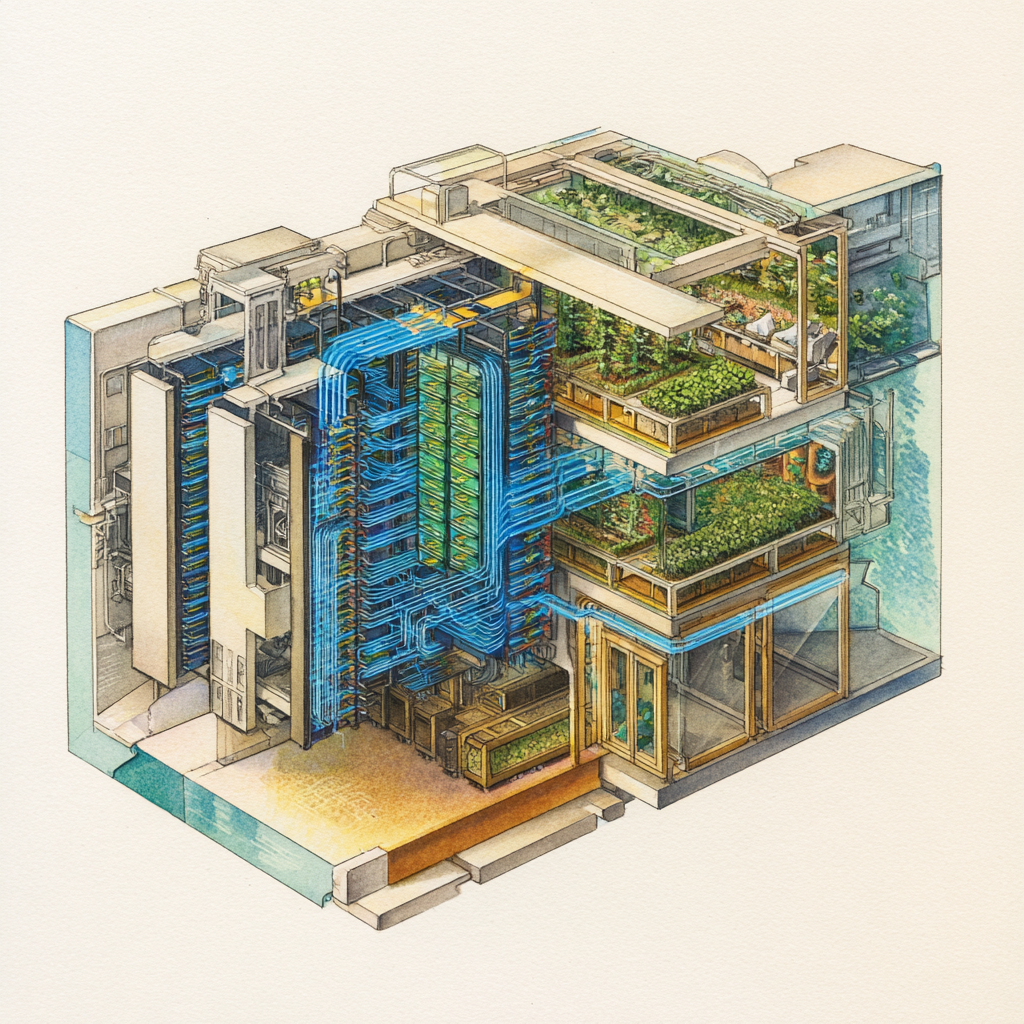
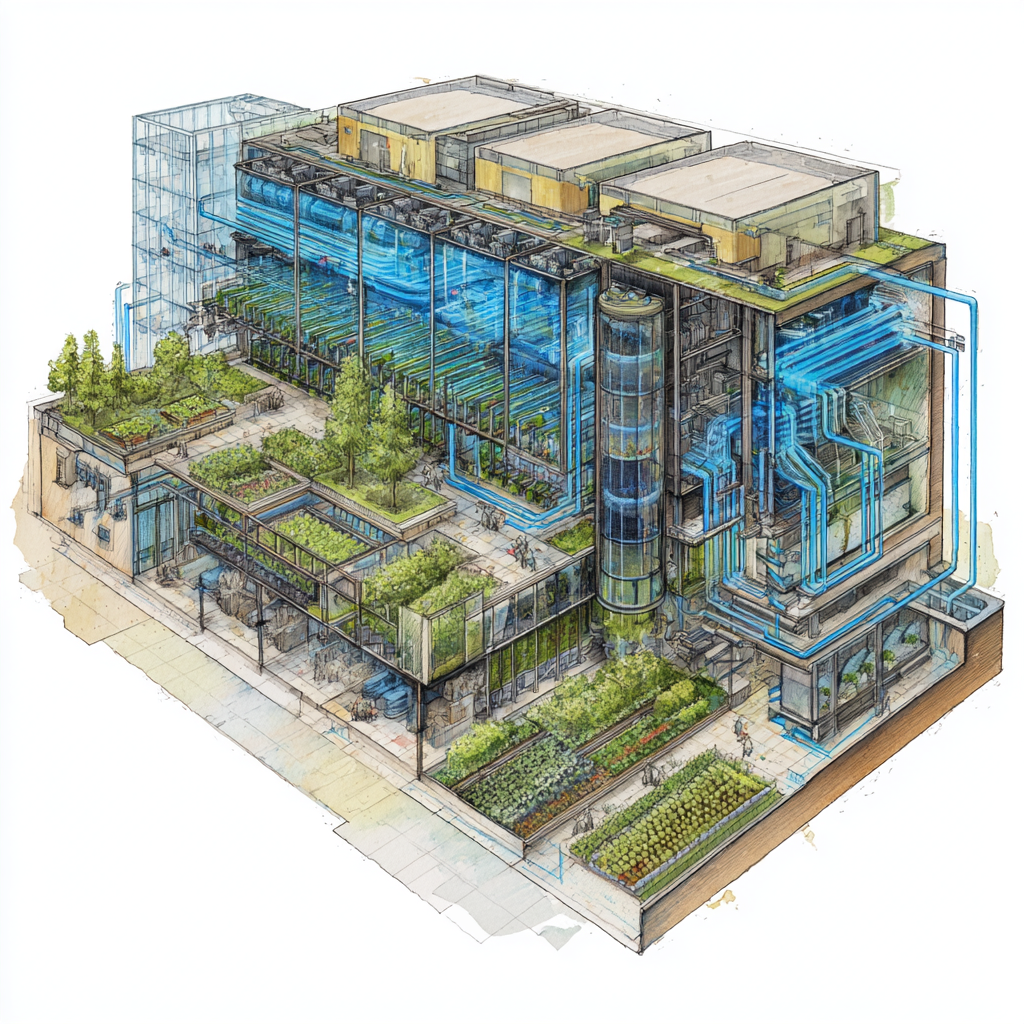
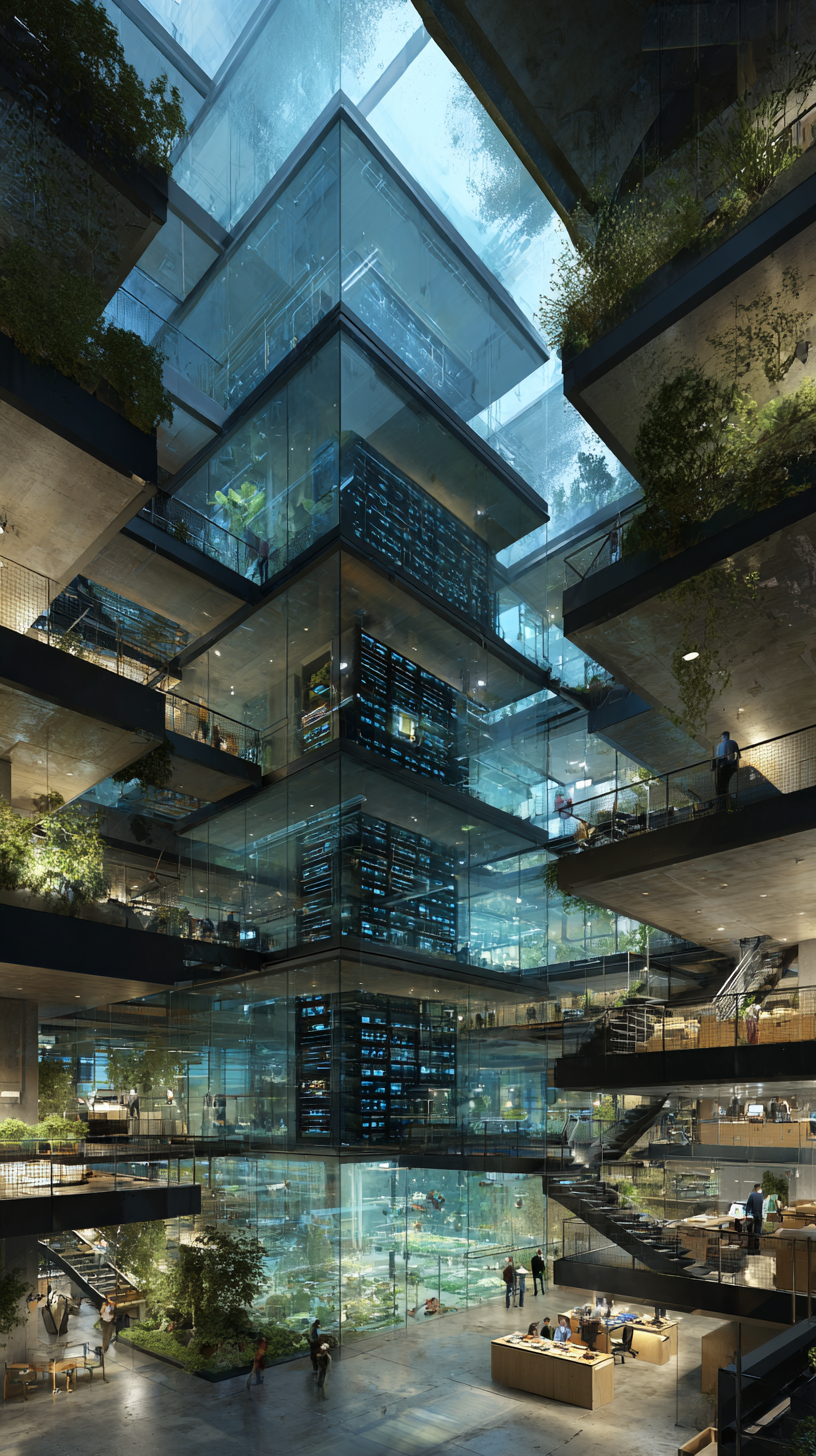
Racks of leafy greens rise where server racks once hummed. Grow lights cast an otherworldly glow. Workers in aprons move between rows. The raised floor remains—now channeling irrigation instead of cables. Teal highlights the water circulation system.
Design for Disassembly
The better question isn't what to do with obsolete data centers—it's how to build them for easier transition from the start.
Modular server halls could be designed as removable units, leaving behind a cleared structural frame ready for new infill.
Standardized connection points for power, cooling, and data could be documented and preserved, enabling future programs to tap the same infrastructure.
Facade systems could be designed for replacement—swapping windowless metal panels for glazing when the security requirement ends.
The raised floor could be maintained as flexible plenum for future uses: hydroponics, cable-intensive production, or simply accessible mechanical distribution.
The data center designed for disassembly doesn't just age gracefully—it actively prepares for its second life.
The Ruin Aesthetic
Some obsolete infrastructure becomes celebrated. Power stations become museums (Tate Modern). Gas tanks become apartments (Vienna Gasometers). The industrial sublime transforms liability into landmark.
Can data centers achieve this? Their aesthetic is more banal than heroic—metal boxes rather than brick cathedrals. But banality has its own appeal. The data center ruin might become a monument to a strange moment in history: when we built the largest, most energy-intensive structures ever constructed to house machines thinking thoughts we couldn't see.
Thesis Trajectories
The Conversion Manual. Select a real decommissioned (or soon-to-be decommissioned) data center. Document its structure, systems, and constraints. Propose three alternative programs with detailed renovation drawings.
The Disassembly Protocol. Design a new data center with end-of-life explicitly considered. What's permanent? What's removable? How is the transition documented and enabled?
The Ruin Projection. Speculate 50 years forward. What does a data center ruin look like when the equipment is scavenged, the power is cut, and the building sits empty? What grows there? Who moves in informally?
The Heritage Question. Will any data centers be preserved as historical artifacts? Which ones? What would a "landmark data center" designation protect—the shell, the equipment, the landscape?