The Distributed Bunker
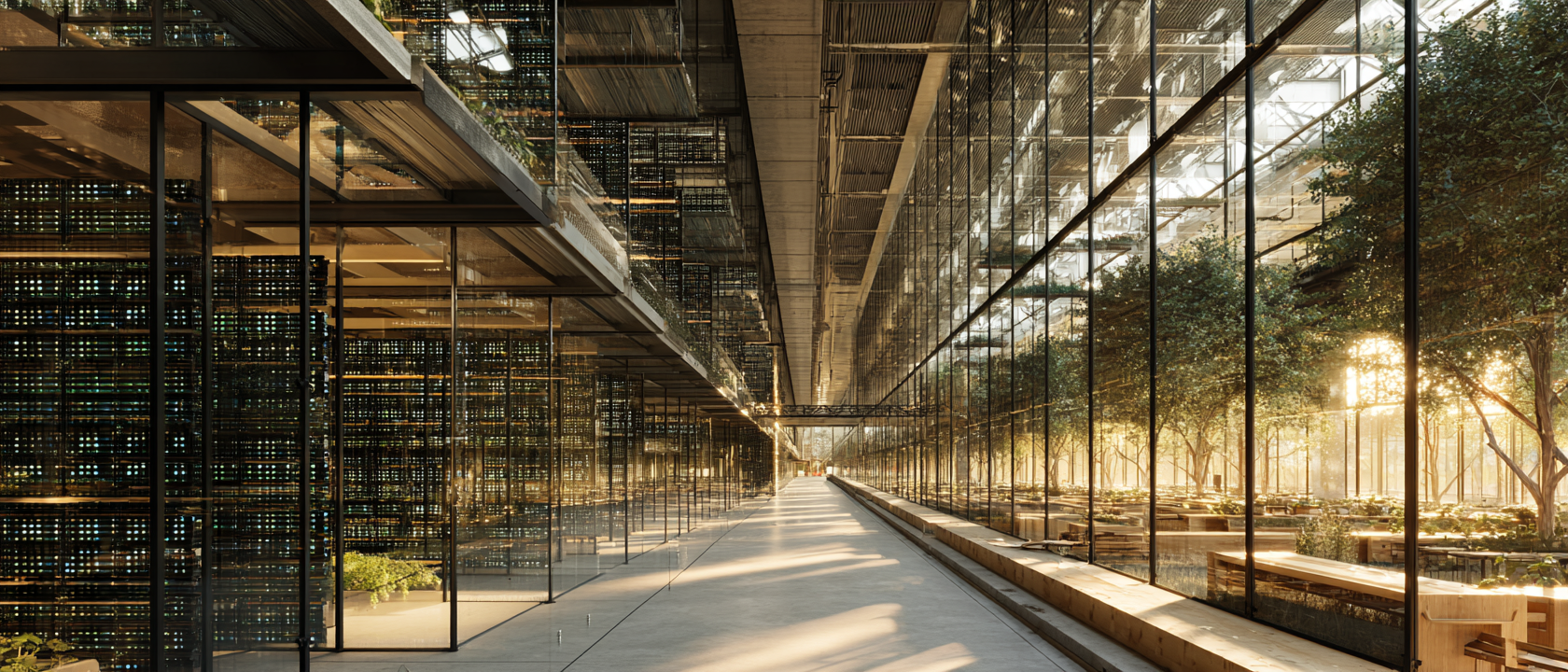
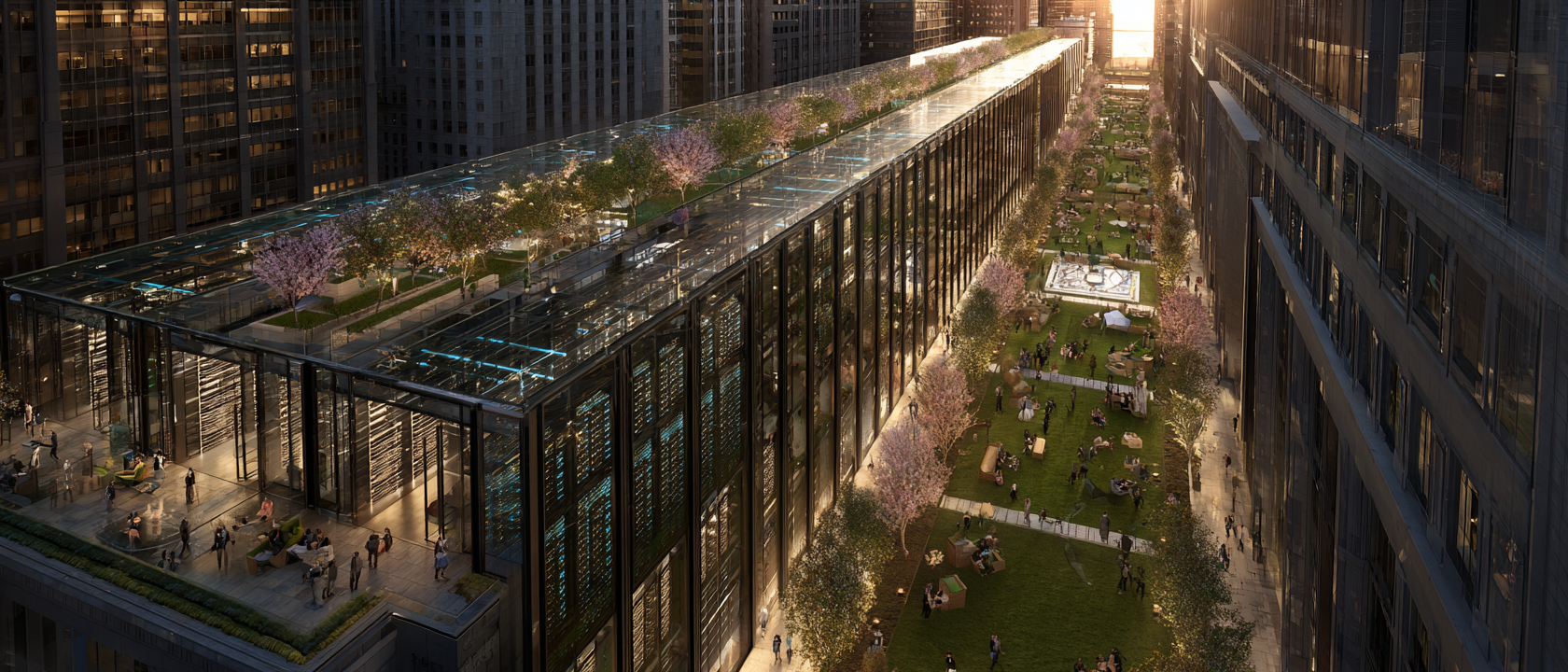
What if hyperscale gave way to a network of small facilities embedded in the neighborhoods they serve?
The current model concentrates compute in massive remote facilities—economies of scale driving ever-larger footprints. But latency matters. Edge computing, autonomous vehicles, and real-time applications demand processing close to users. What if instead of one 100-megawatt fortress, a city hosted a hundred 1-megawatt facilities woven into existing urban fabric?
Research Angles:
What existing urban typologies could absorb small-scale compute? Parking garages, substations, retail basements?
How small can a data facility go before losing economic viability?
What's the architectural language of infrastructure that wants to disappear versus infrastructure that announces itself?
Related Readings:
The Metapolis Dictionary of Advanced Architecture by Susanna Cros
Edge computing white papers from Vapor IO
The Post-Human City by Alejandro Zaera-Polo
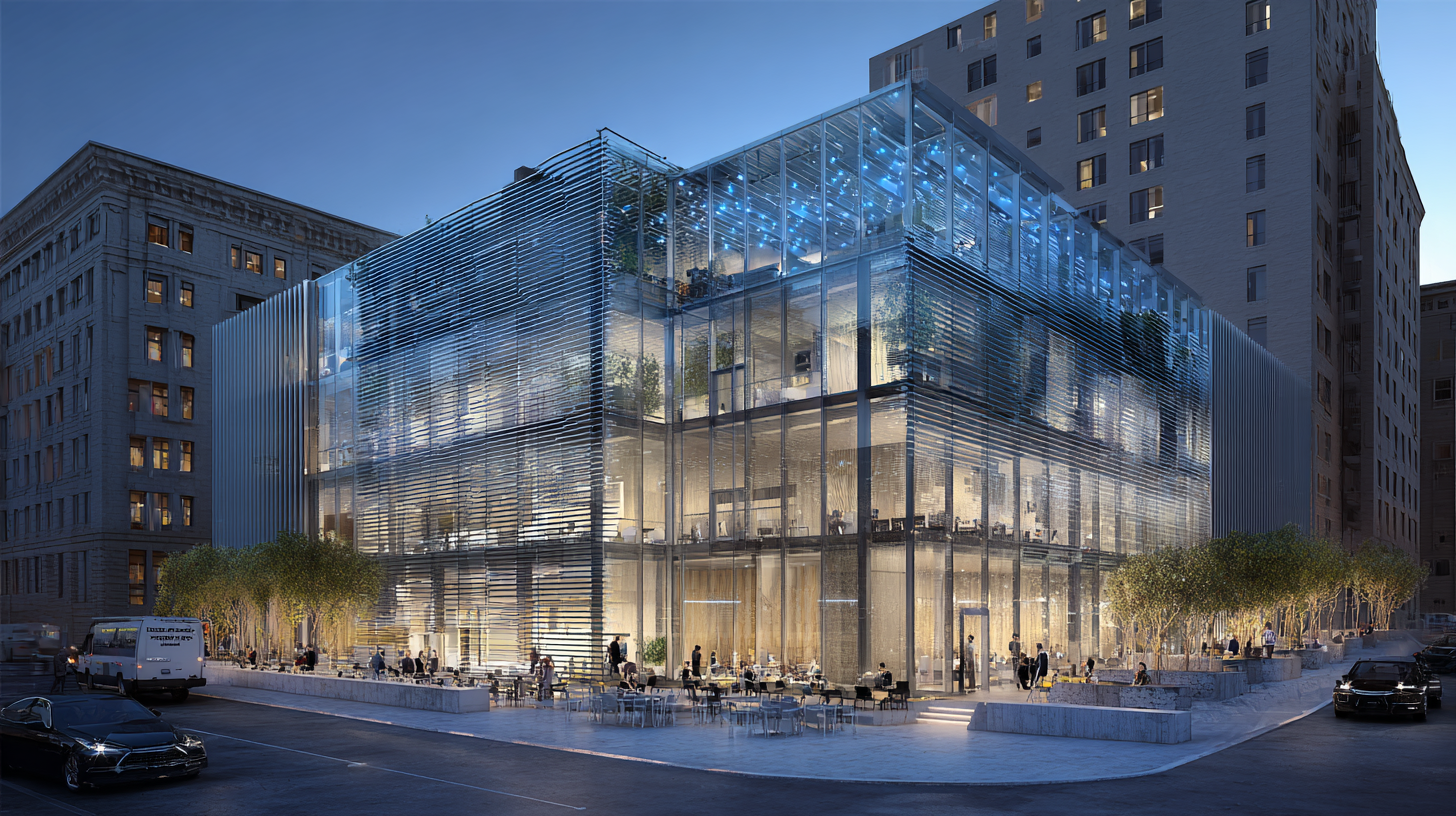
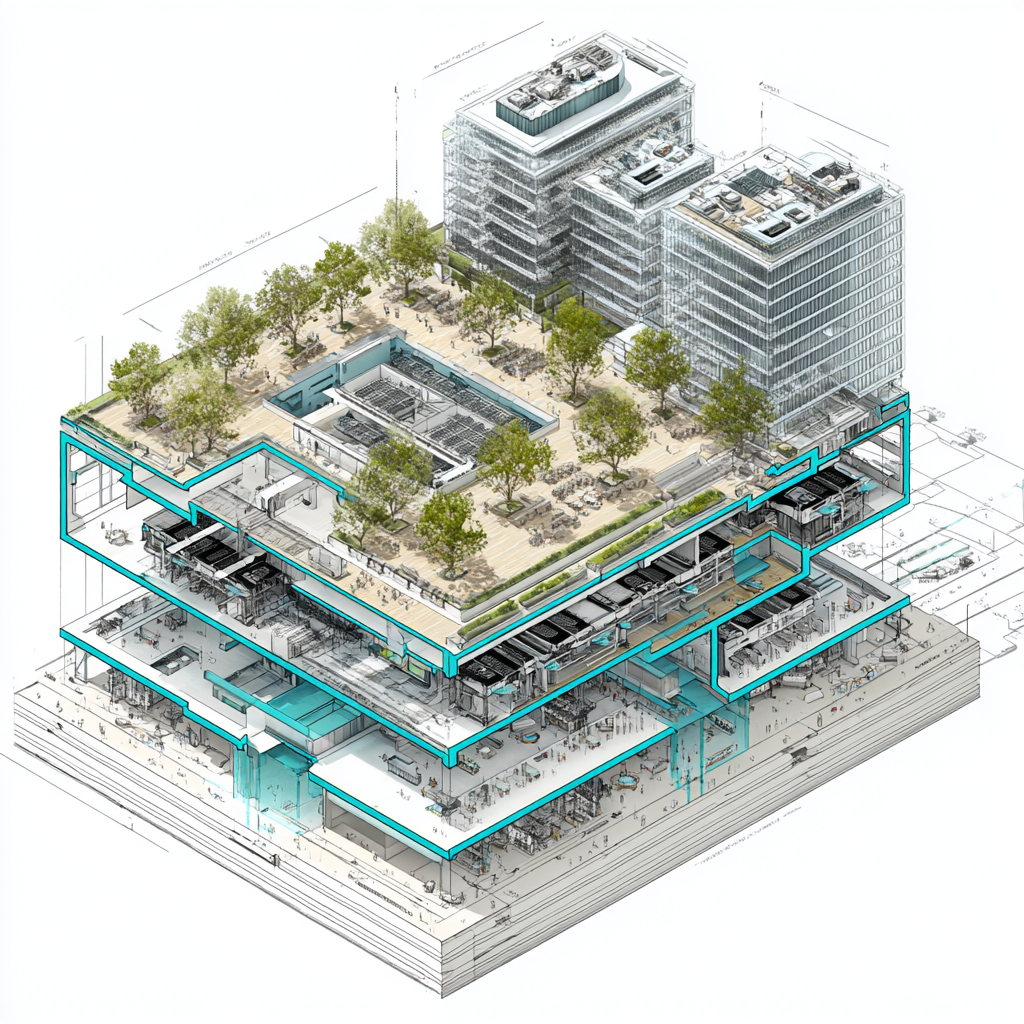
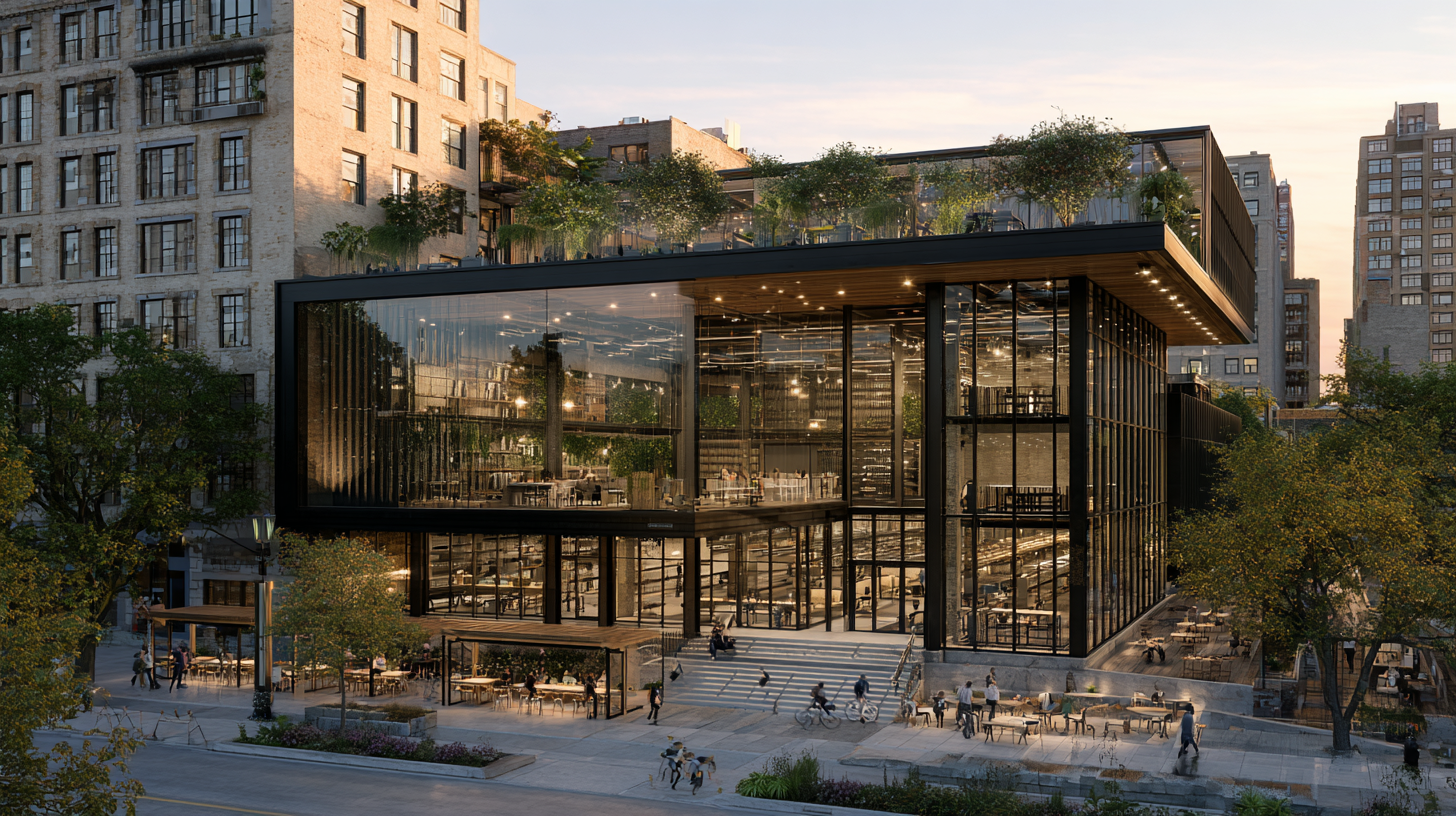
Data centers are typically banned from dense neighborhoods—noise, truck traffic, windowless walls. But what if civic benefits earned them a place? Here, the waste heat warms a public pool. The anchor tenancy funds a branch library. Rooftop farms supply the weekend market. The infrastructure isn't tolerated; it's leveraged. The bunker becomes a neighbor by offering what neighbors need.
The Case Against Hyperscale
Hyperscale data centers exist because concentration is efficient. One building, one security perimeter, one power feed, one cooling system. The logic is industrial: consolidate, optimize, scale.
But concentration creates vulnerabilities. A single facility failure cascades across regions. Transmission losses multiply over distance. And the communities hosting these facilities bear costs—visual blight, water consumption, forgone land uses—without proportional benefit.
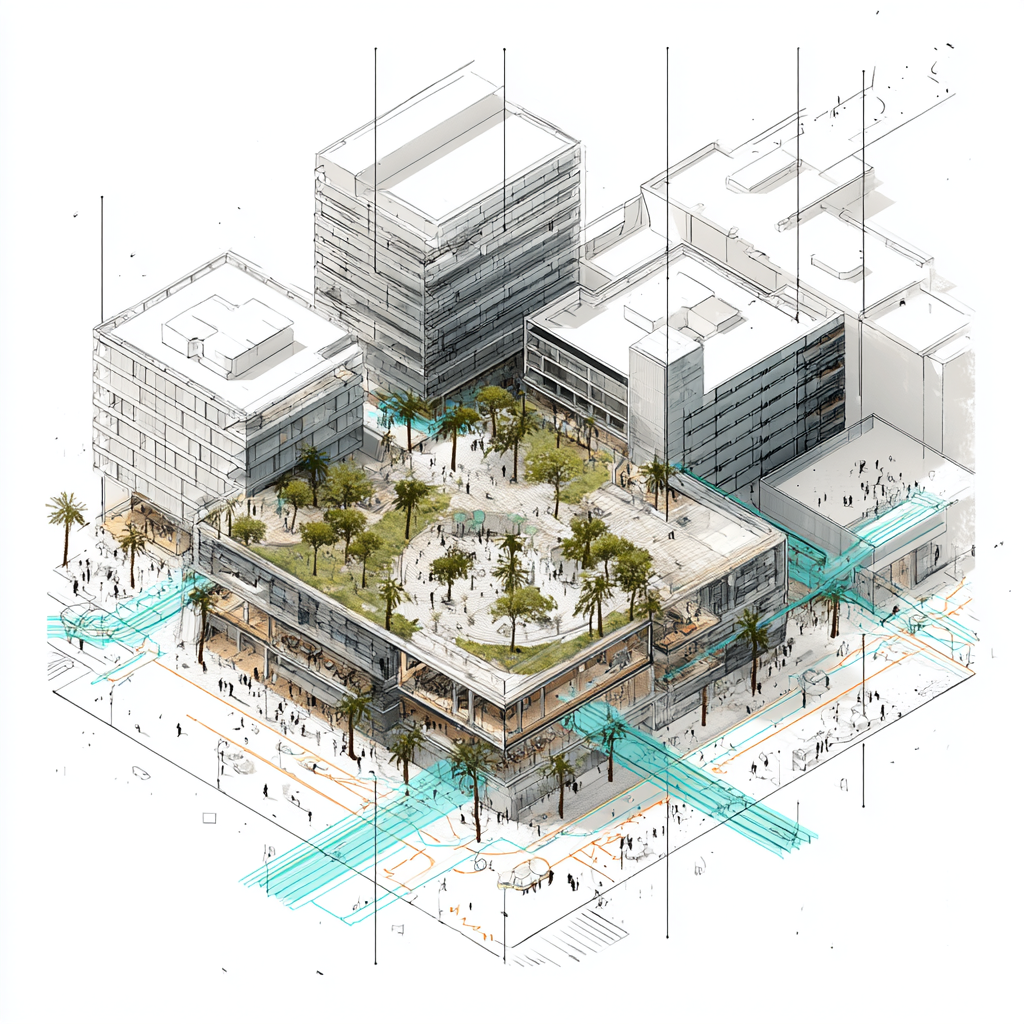
Distributed infrastructure trades peak efficiency for resilience and integration. Smaller facilities can locate where the users are, reducing latency and transmission loss. They can occupy leftover urban spaces—the basement, the rooftop, the underused parking structure. They become part of the neighborhood rather than exile from it.
Hiding in Plain Sight
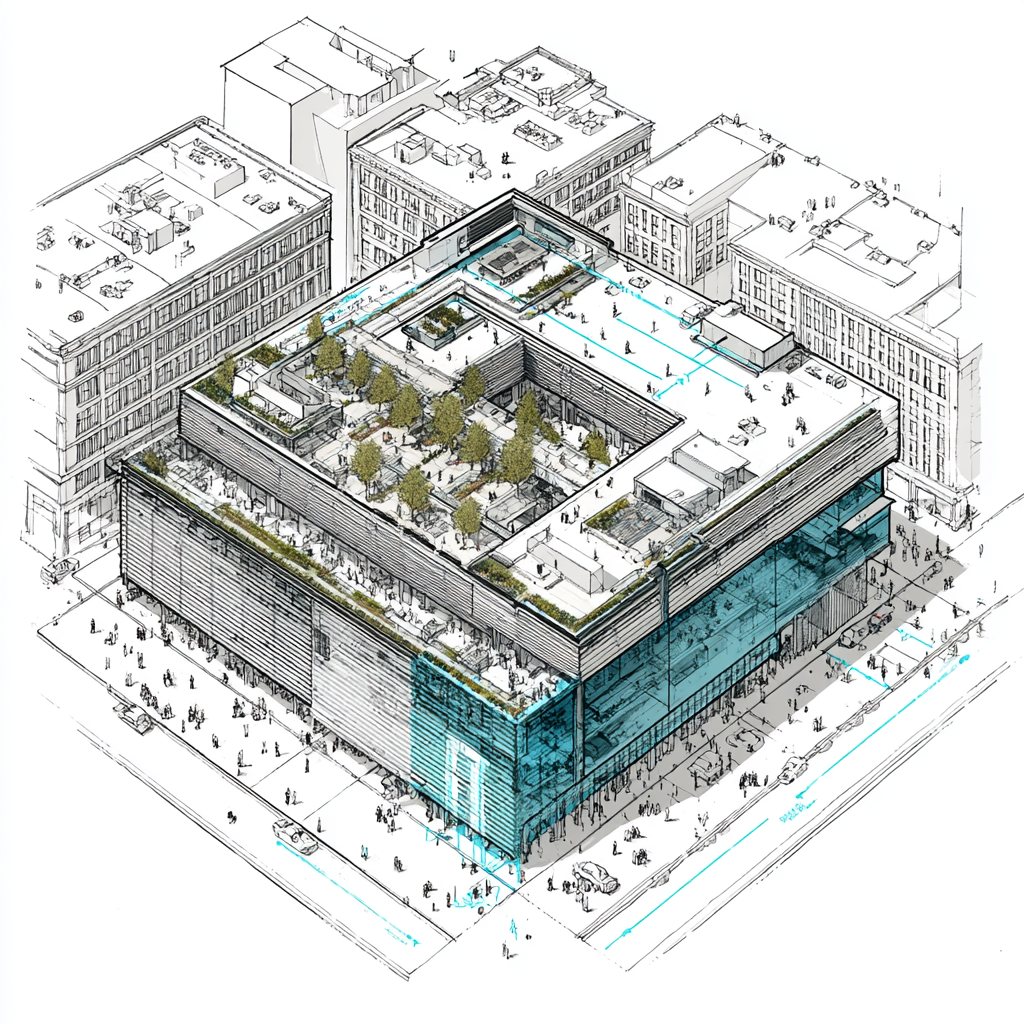
The distributed bunker doesn't look like a data center. It looks like everything else—until you notice the ventilation, the security door, the fiber conduit.
Parking structures offer deep floor plates, structural capacity, and vehicular access for equipment. A few bays on level B2 become a data hall; the rest remains parking.
Retail basements in older commercial buildings often sit underutilized. Climate control exists. Power exists. The data facility becomes another tenant, invisible to shoppers above.
Substations and utility buildings already occupy urban land for infrastructure. Co-locating compute with electrical distribution reduces transmission distance.
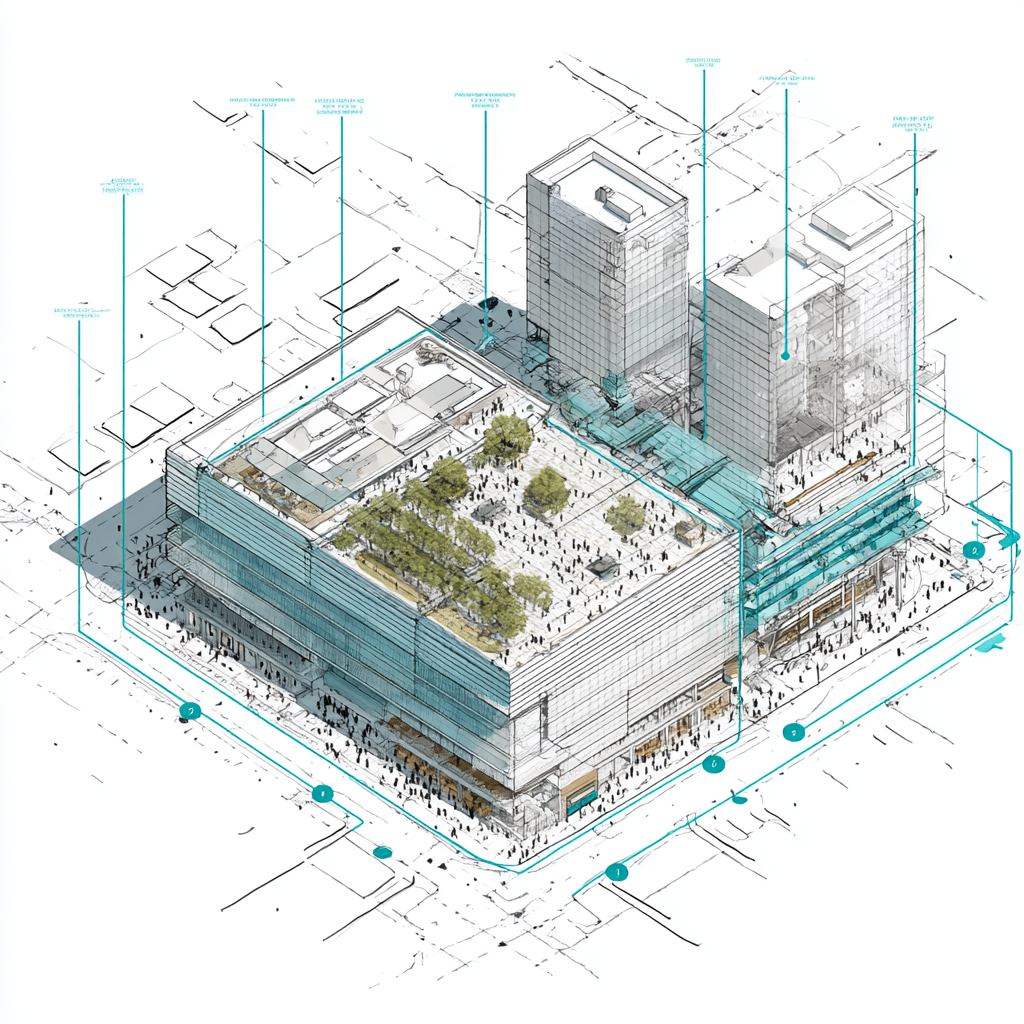
New mixed-use construction can integrate data facilities from the start—designing the mechanical systems, structural loads, and security requirements into the base building.
The Visibility Question
Should distributed infrastructure hide or reveal itself? Two positions:
The invisible approach: Infrastructure causes friction. Neighbors worry about noise, traffic, radiation (real or imagined). The data facility succeeds by being unnoticed—ventilation disguised, equipment silenced, presence unmarked.
The legible approach: Hidden infrastructure breeds suspicion. Better to make the data facility visible and even celebrated—a glass wall showing the blinking servers, signage explaining what happens inside, public dashboards displaying energy use and heat output.
The thesis question: what's the appropriate architectural expression for computation at the neighborhood scale?
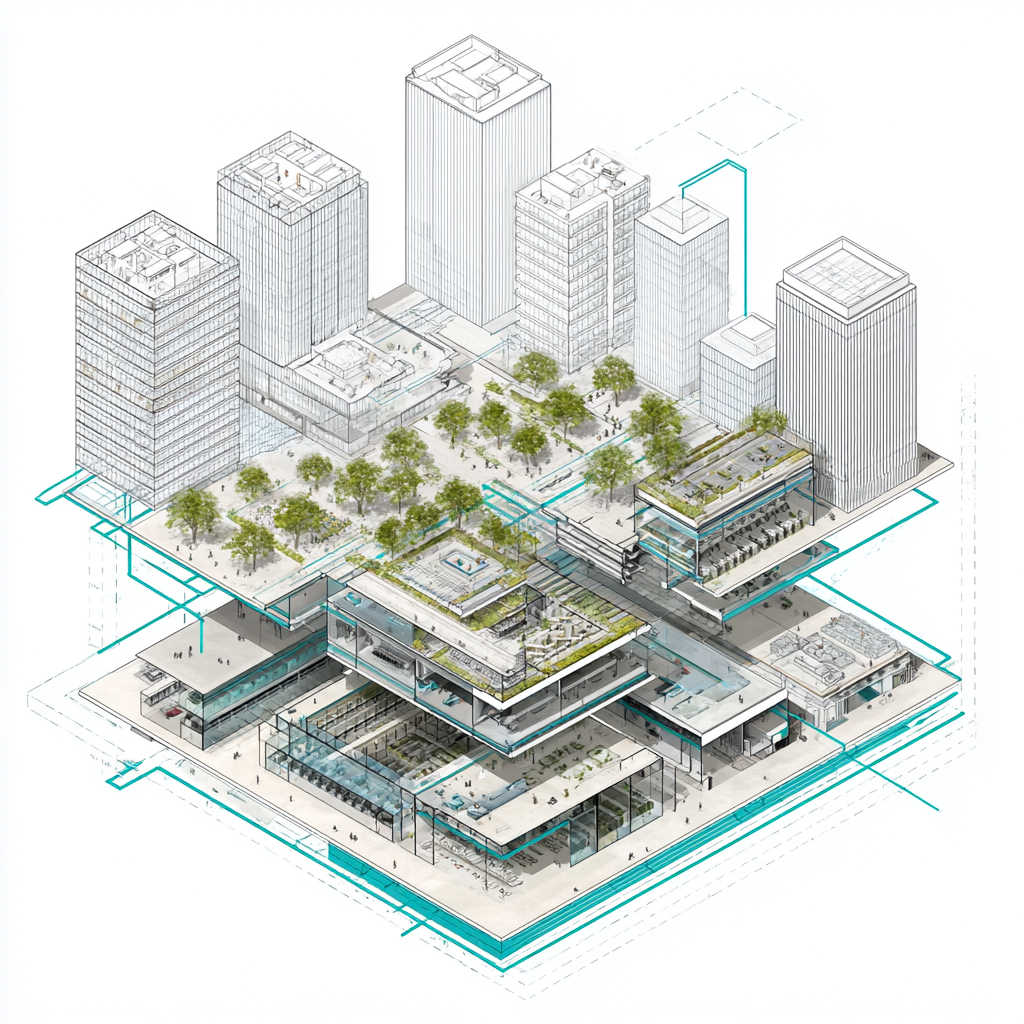
The relationships compress vertically: market hall at grade, server floor humming in the middle, greenhouse capturing rising heat at the roof. A single narrow cut reveals all three. The thermal flows become concentrated and legible—heat climbing through the section like a diagram made habitable. This is infrastructure as lasagna: layered, interdependent, each stratum feeding the next.
Thesis Trajectories
The Retrofit Manual. Select an existing building type—parking garage, big-box retail, office basement—and design the conversion to distributed data facility. Document the technical requirements: power, cooling, fire suppression, security.
The Zoning Amendment. Draft code language permitting data facilities as accessory uses in commercial and industrial zones. What conditions apply? Noise limits, heat recovery requirements, design review?
The Network Diagram. Map a city's latency requirements and propose a distributed network of facilities. Where do they locate? How do they connect? What's the total footprint compared to a single hyperscale facility?
The Public Data Room. Design a data facility that invites public engagement—visible servers, educational displays, community meeting space adjacent. Can infrastructure be civic?